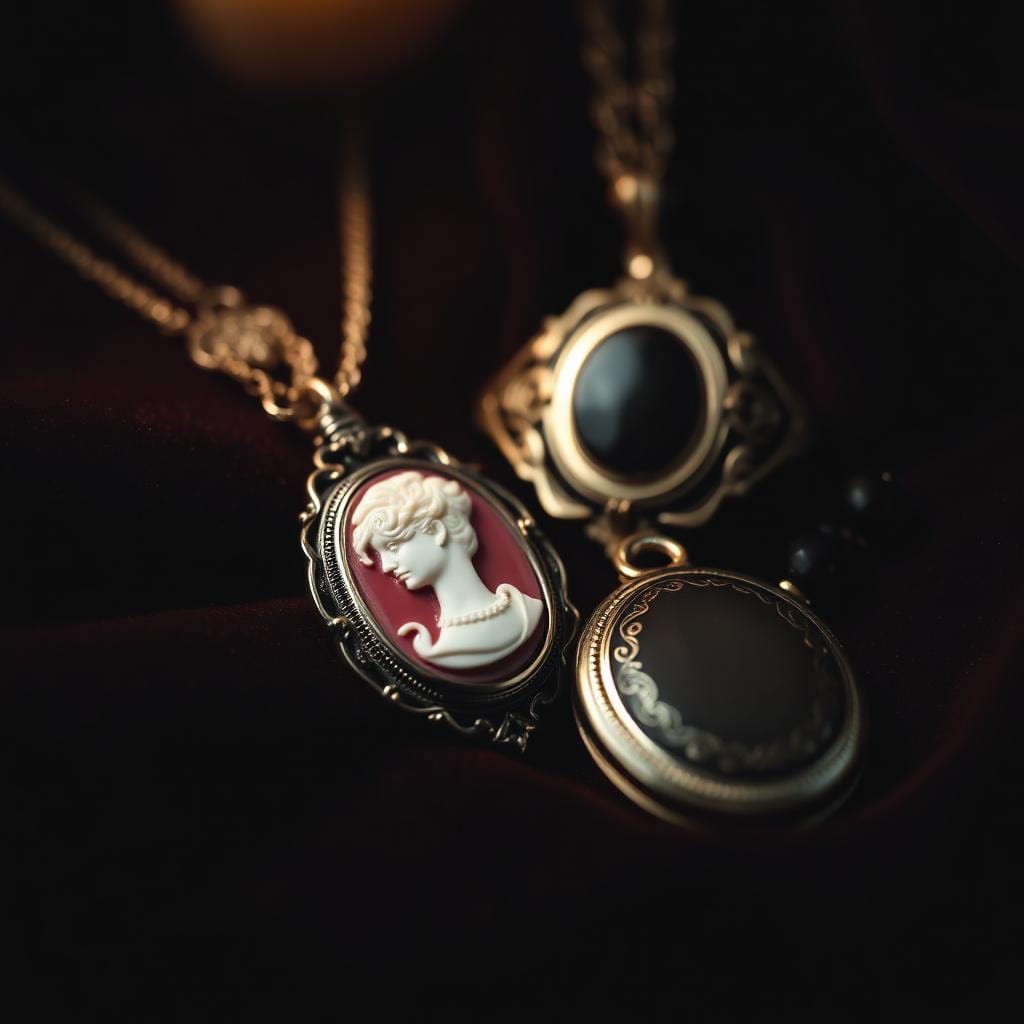

A Quiet Guide to Victorian Mourning Jewelry
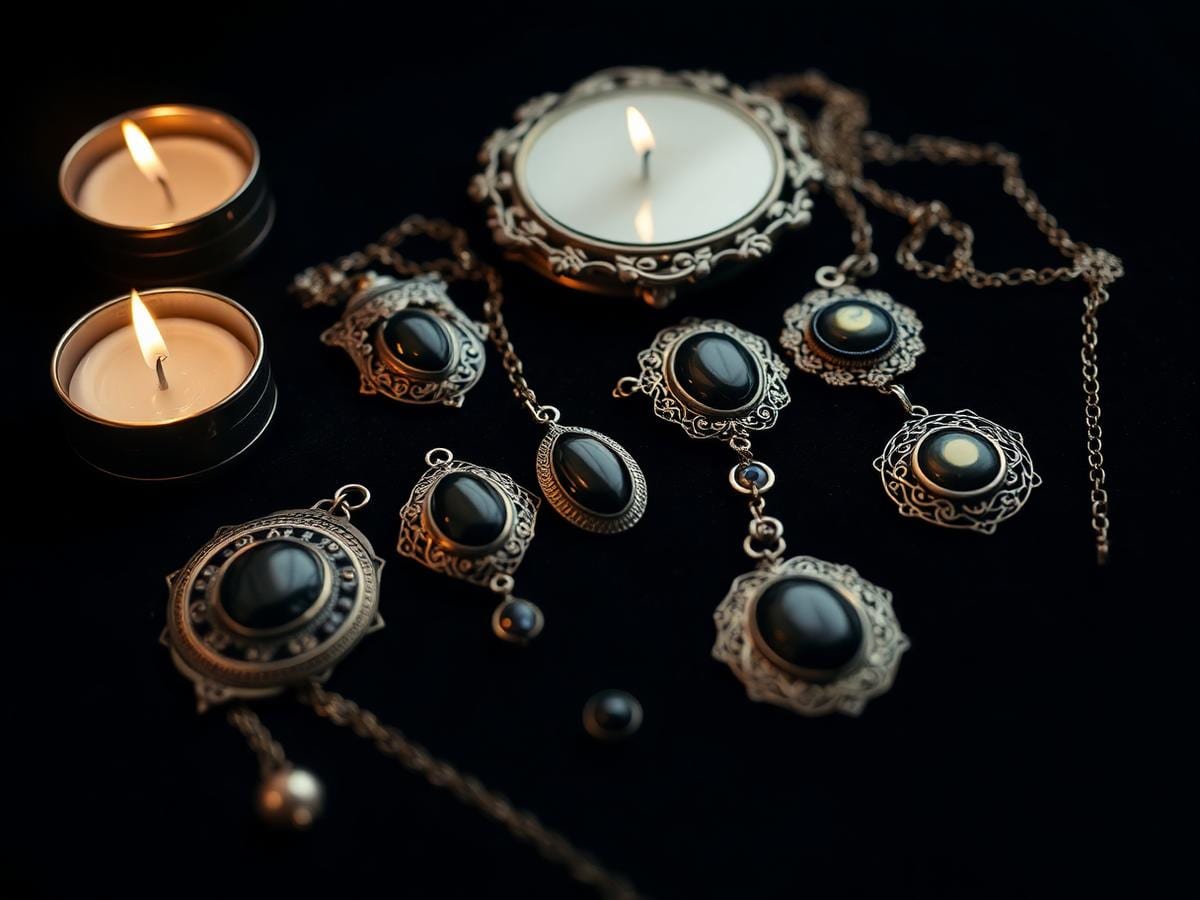
Mourning jewelry began as a private ritual and became, for a while, a public language. A brooch of jet, a locket of hair, a ring set with pearls for tears, each one a small monument you could wear against the skin.
This is a slow guide to buying antique and antique-inspired mourning pieces without turning grief into costume. It leans toward Victorian originals, but the modern makers below understand the vocabulary too.
What to look for
- Whitby jet (warm to the touch, matte-black, feather-light) over French jet or glass
- Hallmarks or maker's marks, even faint ones, on gold and silver settings
- Hairwork under glass, ideally sealed and unrestored
- Signs of honest wear: soft edges, patina, a clasp that has been used
“A good mourning piece isn't sad. It's certain, the way a candle is certain in a dark room.”
- Iona
Where to buy
For antique originals
Established dealers are worth the premium: they date, disclose, and stand behind repairs. Start with specialists who publish provenance on the listing itself.
For thoughtful reproductions
If antique pricing is out of reach, a small number of modern makers cast from period molds and use appropriate materials, vulcanite, sterling, real hair when requested.
A short history worth knowing
The Victorian mourning ritual was strict, and its jewelry followed suit. In the first year of deep mourning, only jet or matte black stones were considered appropriate. Half-mourning, later, permitted pearls, amethyst, and softer greys. Queen Victoria's forty-year mourning for Prince Albert cemented the aesthetic in the popular imagination and turned Whitby, on the Yorkshire coast, into the centre of the jet trade for a generation.
Understanding this timeline changes how you shop. A piece of true Whitby jet from the 1860s is not the same object as a French jet (black glass) copy sold at a country fair in the 1890s, even if they look similar in a photograph. Both can be beautiful. Only one is what it says it is.
Materials, briefly
- Whitby jet: fossilised wood, warm to the touch, feather-light, matte with a soft sheen when polished.
- Vulcanite: hardened rubber, sometimes mistaken for jet, slightly browner in strong light.
- French jet: black glass, cold and heavy, faceted rather than carved.
- Onyx and bog oak: less common but period-appropriate, especially in Irish work.
- Pearls, garnet, and amethyst: mourning-adjacent, appropriate for the later half-mourning period.
How to wear it
One piece at a time, usually. Mourning jewelry does its best work when it isn't competing: a single locket over a high collar, a jet brooch at the throat of a plain black dress, a signet ring on an otherwise unadorned hand. Restraint is the whole aesthetic.
The other quiet rule is context. These pieces were not made to be layered with a dozen others. Give one enough space and it becomes the entire outfit; crowd it and it disappears into a pile of dark ornament.
Caring for it
Antique jet is soft and can chip against harder stones or against itself, so store pieces separately, ideally in a lined box or small cotton pouch. Keep them out of direct sunlight and away from perfume or hair products, which will dull the surface. A dry, soft cloth is all most pieces ever need; skip polishes, which are formulated for bright silver and will strip an antiqued finish.
“The point of a mourning piece is not that it looks sad. It's that it looks kept.”
Frequently asked questions
Is it strange to wear mourning jewelry if I'm not in mourning?
It's a fair question, and the honest answer is: these objects long ago passed out of their original ritual context. Wearing them thoughtfully, without pretending to a grief that isn't yours, reads as respect, not appropriation.
Antique or reproduction, if I can only afford one?
A well-made reproduction from a maker who understands the vocabulary will almost always look better than a cheap antique in poor condition. Save the antique purchase for a piece you can actually verify.
What's the safest first piece to buy?
A simple jet or onyx pendant on a plain chain. It reads immediately, works with almost anything, and doesn't require sizing.